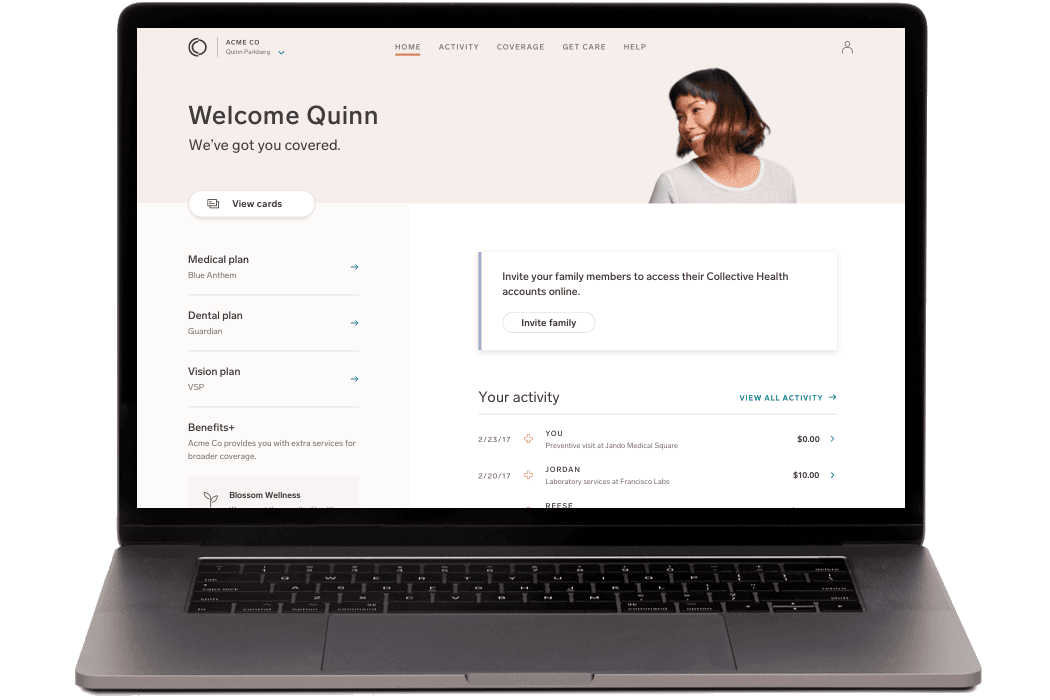
Collective Health was a health insurance startup with about 35 employees and $35 million in VC funding, preparing to scale from a small pilot of 100 members to 40,000 within six months. The industry average for health insurance customer satisfaction was 35% – and Collective Health had secured their funding by promising to double that to 70%. I helped build the enterprise systems that enabled their team to blow past that target entirely: their members rated the health insurance company at 95% customer satisfaction. Here's how a 4-day information architecture assignment turned into a 6-month Atlassian transformation that redefined what their support team could do.
How a 4-Day Atlassian Consulting Gig Became a 6-Month Engagement
In 2015, I was working at Adaptavist as the lead consultant and project manager when Collective Health brought me in for a quick information architecture review. Four days. Straightforward scope. But within the first few hours of conversations with their team, it became clear that the real problem was much bigger than organizing a few Confluence spaces.
Collective Health was a health insurance startup with about 35 employees doing something genuinely different. They wanted to make health insurance not terrible. That's a high bar when you're talking about an industry where the average customer satisfaction rate was just 35%. Collective Health had raised around $35 million in VC funding based on the ambitious promise of hitting 70% customer satisfaction – already double the industry average – and they needed their internal systems to support that ambition as they scaled from a small pilot of about 100 members to 40,000 within six months.
The information architecture work was necessary, but it was a band-aid on a deeper wound. Their tools weren't built for the growth they were planning. I flagged this early, laid out what I was seeing, and proposed expanding the engagement. They agreed, and what started as a quick IA consult became a 6-month Atlassian implementation project.
Why Health Insurance Needs Human-Centered Atlassian Architecture
Most Atlassian implementations I've seen treat the tools as purely internal infrastructure. Configure Jira for the engineering team, set up Confluence for documentation, move on. But Collective Health's situation demanded something different. Their internal tools directly affected how members experienced health insurance.
Think about it: when a customer service rep can't find the right answer quickly, the member on the phone gets a bad experience. When a bug in the system affects a member's claim, the tracking and resolution process determines whether that member loses trust or gains confidence. In health insurance, these aren't minor inconveniences. They're moments where people are dealing with medical bills, coverage questions, and real anxiety about their health.
So I approached the Atlassian implementation with human-centered design principles. Every configuration decision started with the same question: how does this affect the member's experience? Not "what's the cleanest Jira workflow" or "what's the most elegant Confluence structure" – but "will this help someone get a better answer faster?"
Three Integrated Atlassian Systems for Healthcare Operations
The solution required building three interconnected systems, each addressing a critical gap in Collective Health's operations.
Confluence Knowledge Framework for Health Insurance Support
The first system was a Confluence-based knowledge framework designed specifically for health insurance support teams. Health insurance is complicated. The regulatory landscape shifts constantly. Plan details vary by employer. And support reps need to give accurate, compliant answers under time pressure.
I built a Confluence architecture that organized knowledge by how reps actually needed to access it – not by how the company was structured internally. This meant organizing around member scenarios and question types rather than department hierarchies. The structure included templated pages for plan details, decision trees for common member questions, and clear escalation paths for edge cases.
The key insight was that the knowledge base needed to be a living system, not a static reference. I built in review cycles, ownership models, and feedback loops so the content would stay current as Collective Health added new employer clients and plan types.
Customer Service Integration with Atlassian Tools
The second system had two parts. First, we integrated with Collective Health's phone system, which they had built in-house. When a member called, the phone system identified the person based on their phone number, pulled up their profile, and from their profile and benefits, we could map over to Confluence to show exactly what their plan covered. From the time a customer support person picked up the phone, they knew who the person was and what their insurance covered and didn't cover. They could traverse the Confluence pages by linking to get detailed specifics when needed.
Second, we integrated with Jira so that if the member needed something escalated, or there was a bug or issue, all of their information could be picked up and moved into the tracking system immediately. This gave product and engineering teams visibility into what members were actually experiencing. Support trends could surface as Jira issues. Patterns in member complaints could inform sprint priorities.
This wasn't about dumping every support ticket into Jira. That would've buried the engineering team. It was about building smart connections so that meaningful signal reached the right people at the right time.
HIPAA-Compliant Bug Tracking in Jira
The third system was the most technically constrained: a HIPAA-compliant bug tracking workflow in Jira. When you're dealing with protected health information, every aspect of how data moves through your systems matters. Bug reports in health insurance can contain PHI. Screenshots might show member data. Comments might reference specific cases.
I designed Jira workflows and permission schemes that maintained HIPAA compliance without making the bug tracking process so cumbersome that people avoided it. That balance is hard to get right. Too loose, and you're risking compliance violations. Too strict, and engineers start working around the system – which creates even bigger compliance risks.
The solution involved tiered access controls, PHI-specific custom fields that could be restricted independently from the rest of the ticket, and clear protocols for when and how health information could appear in bug reports. I also worked with Collective Health's compliance team to document everything, so the implementation could be audited.
Scaling from 100 to 40,000 Members with Atlassian Infrastructure
These three systems weren't independent projects. They were designed to work together as integrated Atlassian infrastructure that could scale with Collective Health's growth. When a member issue came in through support, the knowledge framework helped the rep resolve it quickly. If the issue revealed a bug, it flowed into the HIPAA-compliant tracking system. If support saw a pattern, it surfaced to product through the integration layer.
This interconnection was the whole point. Isolated tools produce isolated information. Integrated tools produce organizational intelligence. And organizational intelligence is what you need when you're trying to scale from 100 members to 40,000 while maintaining – not just preserving, but actually improving – the quality of the member experience.
Reaching 95% Customer Satisfaction in Health Insurance
The target was 70% customer satisfaction – already double the industry average of 35%, and ambitious enough to secure $35 million in VC funding. Collective Health's members rated the health insurance company at 95%.
I want to be honest about attribution here. Partially thanks to the systems I built, and also because Collective Health had a phenomenal team of really smart people, they hit 95%. The Atlassian infrastructure gave them the foundation to provide really good customer service with really accurate information really quickly – but their commitment to member experience is what drove those numbers. Good tools in the hands of a mediocre team produce mediocre results. Good tools in the hands of a great team produce something remarkable.
That said, the systems mattered. Before this implementation, the support team was working with fragmented tools that slowed them down and hid important information. After it, they had integrated workflows that surfaced the right knowledge at the right time and connected their work to the broader product development process. That infrastructure helped make 95% possible – in an industry where just promising 70% was enough to raise $35 million – because it enabled the team to deliver accurate answers fast, which is what drives satisfaction when people are anxious about their health insurance.
Delivered Under Budget and Ahead of Schedule
I was the lead consultant and project manager for this engagement, with a few other consultants and one engineer from Adaptavist supporting. While I designed the overall architecture, I didn't build or implement everything myself – the customer service integration with the phone system and Confluence was built by an Adaptavist engineer, and the HIPAA-compliant bug tracking was built by two consultants. All of these people were based in London while I was in Missouri, and I was flying out to Collective Health's San Mateo, California office every other week for six months. I was at their Thanksgiving party. By the end of it, I'd been there longer than most of their staff members – when I started there were 35 people, and when I left there were close to 500.
The project came in under budget and ahead of schedule. I mention this not to brag but because it's relevant to how the work was structured. The original 4-day scope could have stayed at 4 days if I'd just done the information architecture work and moved on. Expanding to 6 months was a risk for Collective Health – a bigger investment with a longer timeline.
Delivering under budget meant Adaptavist made less money, but we were okay with that because our priority was Collective Health. I maintain that same approach in Fieldway – my priority is always what the customer needs, and if that means charging them less, I'm okay with that. It also reflected a principle I try to follow in consulting: be aggressive about identifying the real problem, but be disciplined about solving it. Scope creep kills projects. Scope expansion – deliberate, justified, well-managed – saves them. The difference is whether the expansion is driven by the client's actual needs or by the consultant's desire to bill more hours.
Long-Term Impact of Healthcare Atlassian Implementation
The solutions I built became the foundation for Collective Health's continued growth. The Confluence knowledge framework scaled as they added employer clients. The customer service integration kept support connected to product development as both teams grew. The HIPAA-compliant bug tracking workflow held up under audit and continued to protect member data as the volume of engineering work increased.
That durability matters. A lot of consulting work is disposable – it solves the immediate problem but doesn't last. I designed these systems with growth in mind, building in flexibility for the changes I could anticipate and modularity for the ones I couldn't. The fact that the solutions continued to serve Collective Health well beyond the engagement is, frankly, the result I'm proudest of.
Frequently Asked Questions
How do you make Jira HIPAA-compliant for healthcare organizations?
HIPAA compliance in Jira isn't a single checkbox – it's a combination of access controls, data handling protocols, and workflow design. The key elements include tiered permission schemes that restrict access to protected health information, custom field configurations that separate PHI from general bug data, and documented procedures for how health information enters and moves through the system. You also need to work closely with your organization's compliance team to ensure the implementation meets your specific regulatory obligations.
Can Confluence scale for fast-growing health insurance companies?
Yes, but only if the information architecture is designed for growth from the start. The biggest mistake I see is organizing Confluence around current team structure rather than around how information actually needs to be accessed. For health insurance specifically, that means structuring knowledge around member scenarios, plan types, and regulatory requirements – categories that scale naturally as you add clients and members. You also need clear ownership models and review cycles to keep content accurate as the organization evolves.
What's the ROI of integrated Atlassian tools for customer support?
The ROI shows up in two places: direct efficiency gains for the support team and indirect improvements from connecting support insights to product development. At Collective Health, the integrated approach meant support reps could find answers faster (reducing handle time), patterns in member issues surfaced to engineering automatically (reducing recurring problems), and the support team's institutional knowledge was captured in systems rather than locked in individual people's heads. Collective Health attributed their 95% member satisfaction rating in part to these systems because they enabled the team to provide accurate information quickly – the foundation of great customer service in health insurance.
Related Case Studies
- Enterprise Confluence Upgrade for 150,000 Healthcare Professionals – Another healthcare Atlassian engagement, this one focused on migrating 500,000+ pages of critical medical documentation.
- Unifying Documentation for 25+ Atlassian Apps in Confluence – A documentation consolidation project that shares the same principles of human-centered information architecture.
- Defining Product Strategy for the Adaptavist Library – How I applied systems thinking to a different kind of organizational challenge at Adaptavist.