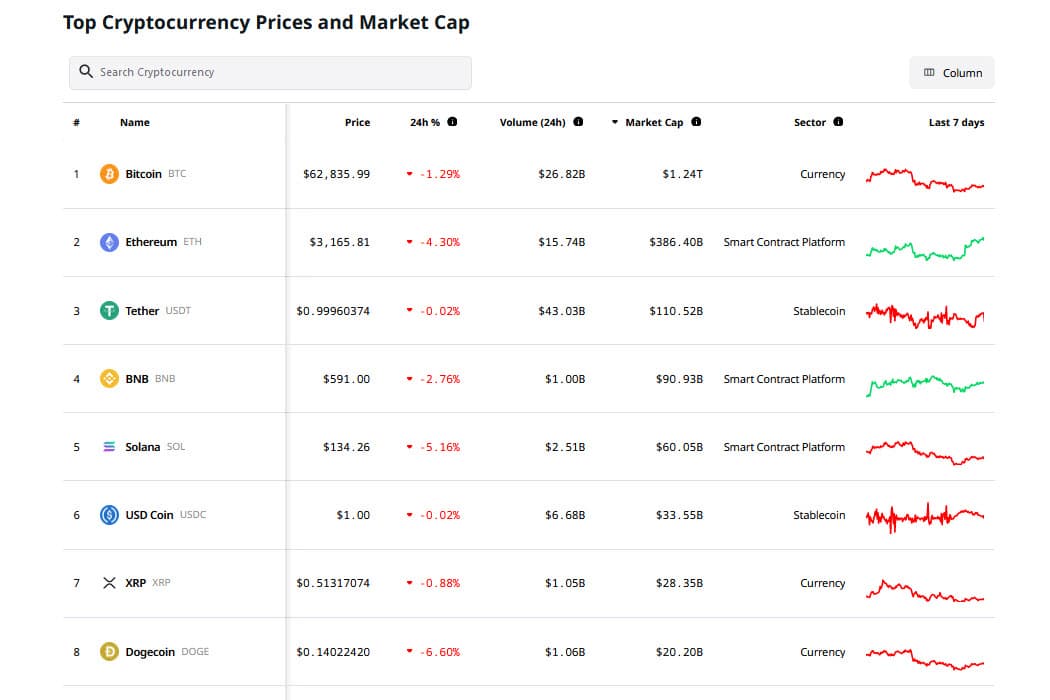
CoinDesk's price pages once generated 80% of the site's total page views. That's not a rounded-up number for effect. Eight out of every ten page views on one of crypto's most recognized media brands came from people checking prices. When that traffic started declining, the business felt it everywhere: ad impressions, engagement metrics, editorial reach, revenue.
This is the story of how I rebuilt the product strategy for those pages, not by trying to out-feature the competition, but by leaning into what CoinDesk actually does better than anyone else.
How CoinDesk's Price Pages Became the Site's Traffic Engine
To understand the decline, you need to understand the peak.
In crypto's earlier years, CoinDesk's price pages were one of the few reliable, well-designed places to check Bitcoin and cryptocurrency prices. The pages were fast, the data was trustworthy, and CoinDesk had the brand authority that comes from being the publication of record for the industry. For millions of users, "check prices" meant "go to CoinDesk."
That combination of utility, trust, and habit created an enormous traffic base. Price pages drove audience to the rest of the site. They were the entry point for readers who'd check a price, see a headline, and click through to a news story. The price pages weren't just a product feature. They were the top of the funnel.
Why Crypto Price Page Traffic Declined: Complacency, Not Layoffs
The decline wasn't caused by a single event. It was complacency.
CoinDesk built the price pages, had massive traffic going to them, and then started ignoring them. Leadership focused on other priorities – notably fixing Arc XP after a disastrous migration – and the price pages just sat there. Meanwhile, the competitive landscape shifted dramatically.
Platforms like CoinGecko, CoinMarketCap, and TradingView invested heavily in their price experiences. They added portfolio tracking, advanced charting, token comparison tools, DeFi analytics, and dozens of other features that helped users do advanced searches, analysis, and tracking. CoinDesk had a table with a price. The competitors built an entire product on top of that.
When leadership finally realized traffic was slipping, they gave the price pages to a product manager from the indices team – someone who didn't really understand the typical price page user or their job to be done, and didn't learn it either. This PM was swayed by every internal stakeholder, and everybody in the company wanted something different. Advertising wanted ads and videos above the fold. Sales wanted something else. Indices wanted their institutional products front and center, even though the typical price page user can't do index-level investing – that's a financial institution product. Editorial wanted their stories front and center.
This product manager tried to make all of them happy, which ended up with none of them being happy and users leaving at an even faster rate. That's the situation I inherited.
The obvious reaction would have been to try and match those competitor platforms feature-for-feature. Build better charts. Add portfolio tracking. Integrate DeFi data. Compete on the technical product.
That would have been the wrong strategy. And we didn't pursue it.
Why Competing on Technical Features Was the Wrong Strategy
Here's the honest assessment I brought to the team: we were never going to win a feature war against CoinGecko or CoinMarketCap.
Those platforms had dedicated engineering teams, often larger than CoinDesk's entire product and engineering org, focused exclusively on price and data tooling. They had years of accumulated features, established user habits, and the kind of deep technical infrastructure (thousands of token integrations, real-time WebSocket feeds, advanced charting libraries) that takes significant sustained investment to build.
CoinDesk could invest a year of engineering effort and still have a weaker technical price product than what CoinGecko shipped last quarter. Resource constraints make that math inescapable.
But CoinDesk has something none of those platforms have: a newsroom full of journalists who cover crypto markets every single day. Reporters who can explain why Bitcoin just dropped 12% in an hour. Analysts who understand the macro forces behind a DeFi summer. Editors who've covered every major market event in crypto's history.
The strategic insight was simple. Don't compete where you're weakest. Compete where you're strongest.
A Four-Phase Product Strategy Connecting Prices to Editorial
I developed a four-phase plan to rebuild the price pages around CoinDesk's editorial strengths. The core idea: transform price pages from static data displays into dynamic hubs that connect price movements to the journalism that explains them.
Phase 1: Contextual Market Coverage on Every Price Page
The first phase focused on the most basic connection between prices and content. Every major cryptocurrency price page needed to surface relevant, recent CoinDesk coverage directly alongside the price data.
This isn't just slapping a "Related Articles" widget on the page. It required building content matching that understood which articles were relevant to which tokens, prioritizing recency for breaking market events, and displaying editorial content in a way that felt integrated rather than bolted on.
The goal: when a user comes to check Bitcoin's price after a 10% drop, they should immediately see CoinDesk's reporting on why. The price page becomes the starting point for understanding, not just a number on a screen.
Phase 2: Enhanced Market Analysis and Editorial Features
Phase two deepened the editorial integration. This meant working with the newsroom to create structured market analysis content specifically designed for price page consumption.
Think market summaries that update throughout the trading day. Key event timelines showing what happened and when. Analyst takes on near-term outlook. All surfaced contextually on the relevant price pages, formatted for scanability rather than long-form reading.
This phase also included improving the data presentation itself. Not by trying to build TradingView-quality charts, but by making the existing data displays cleaner, faster-loading, and more mobile-friendly. Solid fundamentals rather than feature bloat.
Phase 3: Cross-Linking Price Data Into Editorial Content
Phase three flipped the direction of integration. Instead of just putting editorial content on price pages, we would embed price data into editorial content.
When a reporter writes about Ethereum's gas fees spiking, the article should include live ETH price context. When an analysis piece discusses Bitcoin's correlation with macro indicators, relevant price movements should be visible inline. This creates a bidirectional relationship where prices drive readers to content and content drives readers to prices.
This phase required close collaboration with the editorial team on workflow and tooling. Reporters needed easy ways to embed price widgets in their stories without breaking their writing flow. The CMS needed to support these embeds cleanly.
Phase 4: The CCData Acquisition and Data Depth
The acquisition of CCData gave CoinDesk something it had never had before: institutional-grade market data infrastructure.
CCData's pricing indices, historical datasets, and market analytics added a layer of data authority that strengthened the entire price page strategy. CoinDesk could now offer not just current prices, but the kind of deep market data that institutional readers and serious traders value.
More importantly for the overall strategy, CCData's capabilities gave the newsroom better tools for data-driven reporting. Journalists could reference precise index methodologies. Analysis pieces could incorporate historical comparisons with authoritative sourcing. The data and the editorial product reinforced each other.
Traffic Results: Renewed Growth After Strategic Refocus
The strategy worked. After a sustained period of decline, CoinDesk's price page traffic returned to growth.
I want to be precise about what this means and what it doesn't. We didn't recapture the era when price pages drove 80% of page views. The competitive landscape has permanently changed, and users who want advanced charting tools are going to use platforms built for that purpose.
What we did accomplish: stabilized and then grew traffic by giving users a reason to check prices on CoinDesk specifically. The editorial context. The "why" behind the numbers. That's a differentiator no pure data platform can replicate, because none of them have a newsroom.
The renewed growth also showed up in engagement metrics beyond raw page views. Time on page increased as users consumed the editorial content surfaced alongside prices. Pages per session improved as users clicked through from price pages to full articles. The price pages were doing what they'd always done at their best: serving as the gateway to CoinDesk's journalism.
Product Lessons from the Crypto Price Page Turnaround
This project reinforced several product principles I keep coming back to.
Compete on your actual strengths, not your aspirational ones. CoinDesk's strength is journalism. Building a better charting library would have been aspirational. Building better connections between prices and reporting was playing to strength.
Resource constraints force strategic clarity. With unlimited engineering resources, we might have tried to compete on features and editorial integration simultaneously. The constraint forced a choice, and the choice turned out to be the right strategy regardless of resources.
Cross-functional strategy requires cross-functional buy-in. This plan touched engineering, editorial, design, and the data team. It only worked because every group understood the strategy and saw their role in it. Product management in a newsroom means translating between very different professional cultures.
Don't try to reverse a structural market shift. The days of a media company owning the price data experience are probably gone. Accepting that and finding a sustainable niche within the new landscape is better strategy than pretending it's 2017.
Frequently Asked Questions
How do you increase traffic to cryptocurrency price pages?
The most effective approach depends on your competitive advantage. For CoinDesk, it meant integrating editorial context, market analysis, and explanatory journalism directly into price pages. Pure data platforms compete on features. Media companies should compete on insight and explanation. The key is giving users a reason to check prices on your platform specifically, not just matching what every other price tracker offers.
What makes a good product strategy for a media company's data pages?
The best media company data products connect raw data to editorial expertise. Data alone is a commodity. Any platform can display Bitcoin's current price. What differentiates a media company is the ability to explain what the data means. Structure the product so data displays and editorial content reinforce each other, with clear pathways between "what happened" and "why it happened."
How did the CCData acquisition affect CoinDesk's price pages?
CCData gave CoinDesk institutional-grade market data infrastructure, including pricing indices, historical datasets, and analytics tools. This strengthened both the data product (more authoritative, deeper information) and the editorial product (better tools for data-driven journalism). The acquisition was most valuable as a strategic reinforcement of the editorial-first price page approach rather than as a standalone data play.
Related Case Studies
- CoinDesk Replatform: Migrating from Arc XP to Sanity and Vercel –The full-stack migration that gave CoinDesk's price pages (and everything else) a faster, more flexible foundation
- Optimizing CoinDesk's Video Player for Viewability and Ad Revenue –Another case where diagnosing the real problem mattered more than building new features